

If you’re looking for a new broadband plan, you might be wondering which providers are best in 2026.
In this guide, we’ve looked at 10 of the best broadband providers in the UK right now, based on their speeds, value for money, WiFi router, customer service, and more.
Later on in the article, we’ll also explain what you need to know when shopping for a broadband deal, so you can find the right tariff for your household’s needs.


Contents
Best broadband providers
Below, we’ve taken a look at 10 of the best broadband providers in the UK right now.
1. Three 4G/5G Broadband
Three has a slightly different way of delivering broadband service compared to most other providers on the market.
Rather than getting you connected using a fibre broadband network, Three will ship you a 4G Hub or 5G Hub router, which takes a SIM card, and connects to the Three mobile network to establish an internet connection.
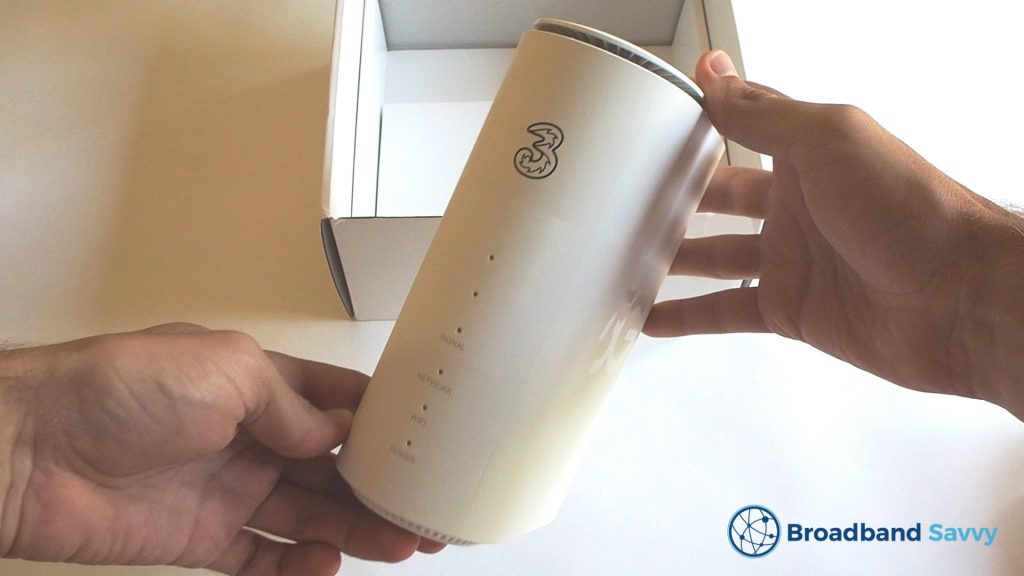
This means getting set up with Three Home Broadband is very easy, with no engineer visit required – all you need to do is insert the SIM, and plug in the router.
And once you’re live, the device works just like any other broadband router, creating a WiFi hotspot you can use to get online on up to 64 devices at once.
Plus, you can pick up the Hub and use it to get online anywhere in the UK, not just at your home address, as long as you have good 4G or 5G signal.
The best thing about Three Home Broadband though is its price. These are the cheapest broadband deals on the market right now, and still offer fast speeds (up to 300-500 Mbps with the 5G Hub from our testing).
There are no upfront costs, and Three Home Broadband comes with a 30-day return policy, allowing you to test the router and see how it performs at your address before you commit to the default 24 month contract.
There is also the choice of a 12 month or rolling monthly agreement in case you don’t want to lock in for a long time, which very few other broadband providers offer at the moment.
The only real downside to Three 4G/5G Broadband is your latency will be a bit higher compared to with a fibre connection. However, we found that the 4G Hub and 5G Hub both offer very good performance when playing online games, with next to no lag or ping spikes.
Pros
- Cheapest broadband deal in the UK right now.
- Very easy to set up.
- Flexible return policy, allowing you to test the device for 30 days.
- Good range of available contract lengths.
Cons
- Slightly higher latency compared to fibre broadband.
2. Virgin Media Broadband
There are a lot of things to like about Virgin Media Broadband.
They’re a great choice if you want an all-in-one provider, bundling TV, home phone calling, or O2 Mobile SIMs with your broadband plan – especially if you want to access TV channels such as Sky Sports and TNT Sports.
They also offer very fast download speeds and low prices on their broadband-only deals, also making them a good choice if you just want fast broadband.
Virgin is currently completing a massive full-fibre upgrade to their broadband network, meaning they now offer symmetrical download and upload speeds of up to 2 Gbps in many parts of the UK. This fibre technology also offers very consistent performance.
Also, Virgin have recently rolled out their new Hub 5 router on nearly all of their available deals, which comes with WiFi 6, and is quite a good bit of kit. It’s a big upgrade on the old Hub 3.
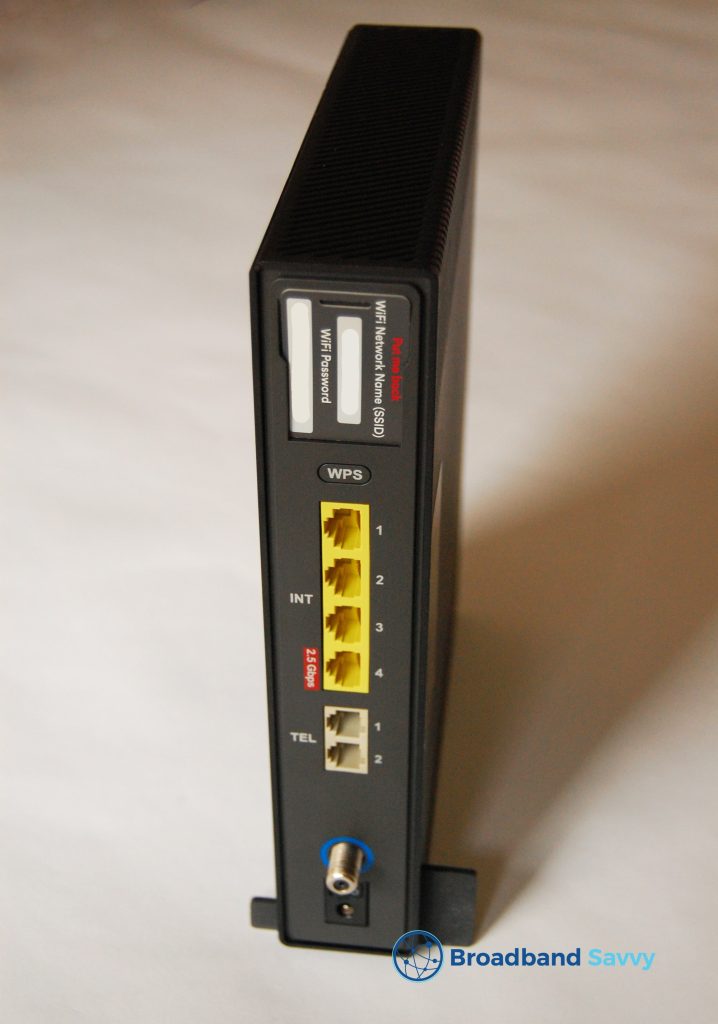
The slight downside to Virgin Media is, in some areas, their upload speeds are slightly lower than what most Openreach providers give you, though this isn’t the case if you’re in one of their full fibre areas and choose to buy their relatively inexpensive upload speed add-on.
In many parts of the UK where upgrades are rolling out, Virgin Media is cheaper and faster than the likes of EE, BT, and Sky most of the time – both in terms of download and upload speeds.
We recommend checking out the Virgin Media website to see what technology (full fibre or cable) is available at your address. If you can get Virgin Media full fibre, they’re a particularly great choice, but their cable plans, with a maximum download speed of 1,130 Mbps, still offer really good value for money and a great WiFi router.
Pros
- Fast download speeds.
- Great choice for broadband and calls or broadband and TV.
- Low monthly costs.
- Solid WiFi 6 router.
Cons
- Upload speeds are not the best, but this isn’t the case in full-fibre areas.
3. EE Broadband
If you want fast fibre broadband with a really good WiFi performance, we think EE is a great choice at the moment.
This provider is available almost throughout the entire UK, and offers very fast download speeds of up to 1.6 Gbps – though this fastest plan can be a bit expensive.
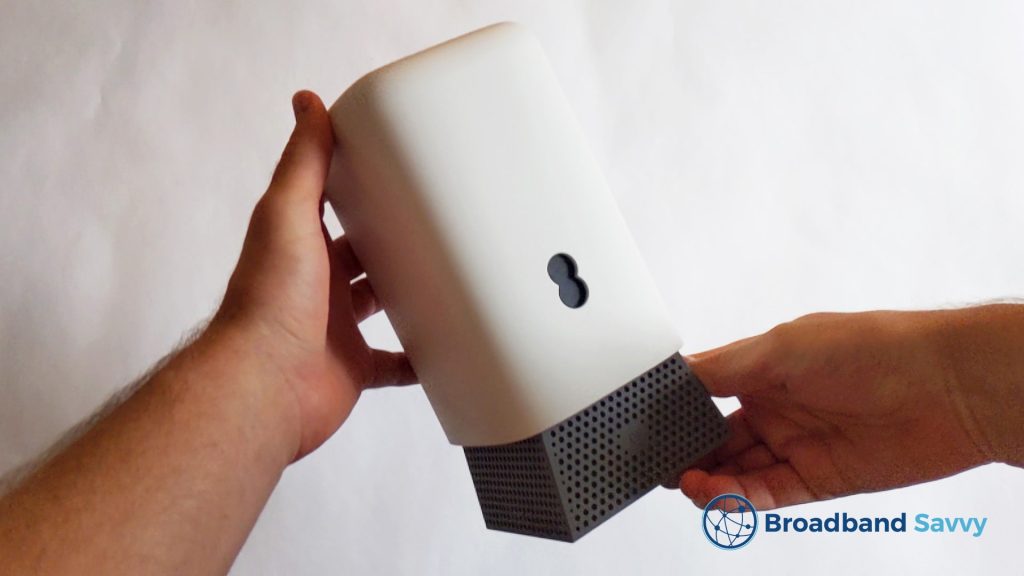
The best thing about EE is their routers. Their default Smart Hub 7 Plus router comes with WiFi 7. Basically no other broadband providers offer WiFi 7 tech as standard right now.
Plus, on their fastest plans, you can get EE’s Smart Hub 7 Pro router, which also comes with WiFi 7, and offers even better performance from our testing. You can also choose to upgrade to this router on other plans if you prefer.
EE’s broadband deals are normally very reasonably priced, with no upfront fees on their 24 month contracts, and there is the choice of a 12 month agreement as well. However, their fastest 1.6 Gbps plan is a bit expensive given its upload speeds aren’t much faster than on the 900 Mbps tariff.
You also get access to exclusive benefits on EE Mobile as an EE Broadband customer, such as the ability to upgrade existing SIMs to unlimited data, as well as discounts on new SIM plans, which is a nice touch.
Pros
- Excellent WiFi tech.
- Good value for money.
- Great range of EE Mobile benefits included.
- Can choose between a 12 or 24 month contract.
Cons
- 1.6 Gbps plan is expensive.
4. Vodafone Broadband
Vodafone is another provider that offers really good WiFi signal and speeds, though they do things a bit differently to EE.
For each speed tier they offer, Vodafone has a few different plans to choose from.
A WiFi 6 router is included by default, which is great, but on their Pro 3 plans, you get Vodafone’s Ultra Hub 7 WiFi 7 router, plus a signal booster.
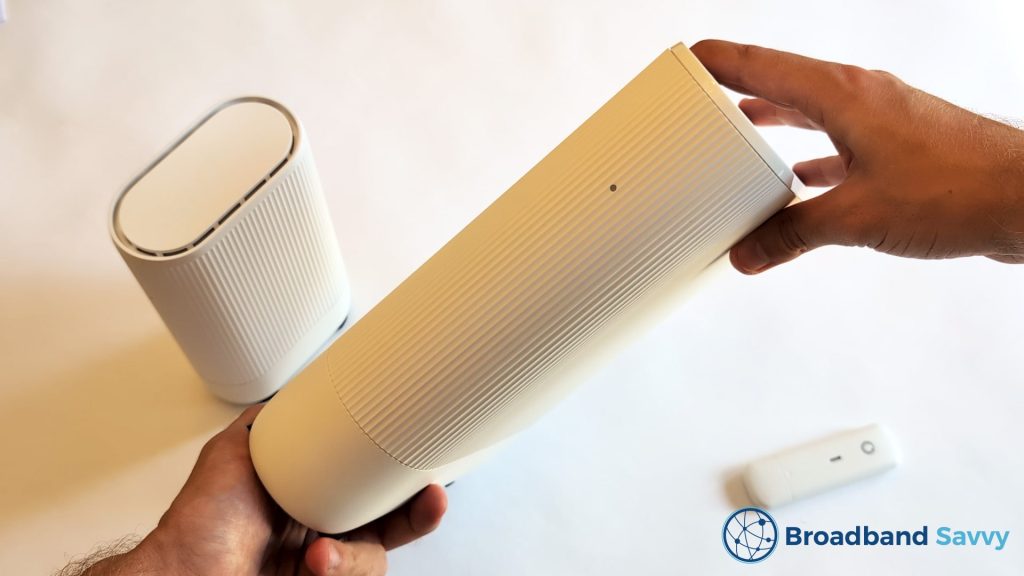
This router performs really well from our testing, and combined with the signal extender, it can easily be used to get good WiFi speeds throughout larger houses.
Vodafone’s Pro 3 plans are quite expensive, but they do also come with a 4G broadband backup device, which is the dongle you see in the image above, allowing you to stay online even if your fibre connection goes down.
Their more basic tariffs are some of the cheapest on the market though, and you can get a discount on all of Vodafone’s broadband deals as an existing pay monthly Vodafone Mobile customer.
Plus, Vodafone offers very fast speeds – up to 1.6 Gbps in most areas, and even up to 2.2 Gbps in certain locations.
However, they don’t give you the choice of a 12 month contract like EE does. You have to commit for 24 months as a new Vodafone Broadband customer.

Pros
- Offers a really good router and extender bundle.
- Very low prices on basic plans.
- Extremely fast speeds.
- Discounts are available for Vodafone Mobile customers.
Cons
- Pro 3 plans are a bit expensive.
- Minimum 24 month contract.
5. BT Broadband
These days, BT is a relatively basic broadband provider – but they’re still definitely worth considering.
They offer simple deals with fast download speeds – up to 900 Mbps – while still giving you access to a good range of useful add-ons, such as a landline connection, or a TNT Sports subscription.
BT’s customer service is good, and they also offer great value for money. On this page on the BT website, you can normally get a reward card included with your plan, which you can use like a prepaid debit card at most stores, effectively giving you two or three months’ worth of broadband for free when you buy.
The main downside to BT is, they’re still shipping the slightly old Smart Hub 2 WiFi router to new customers, no matter which of their plans you choose.
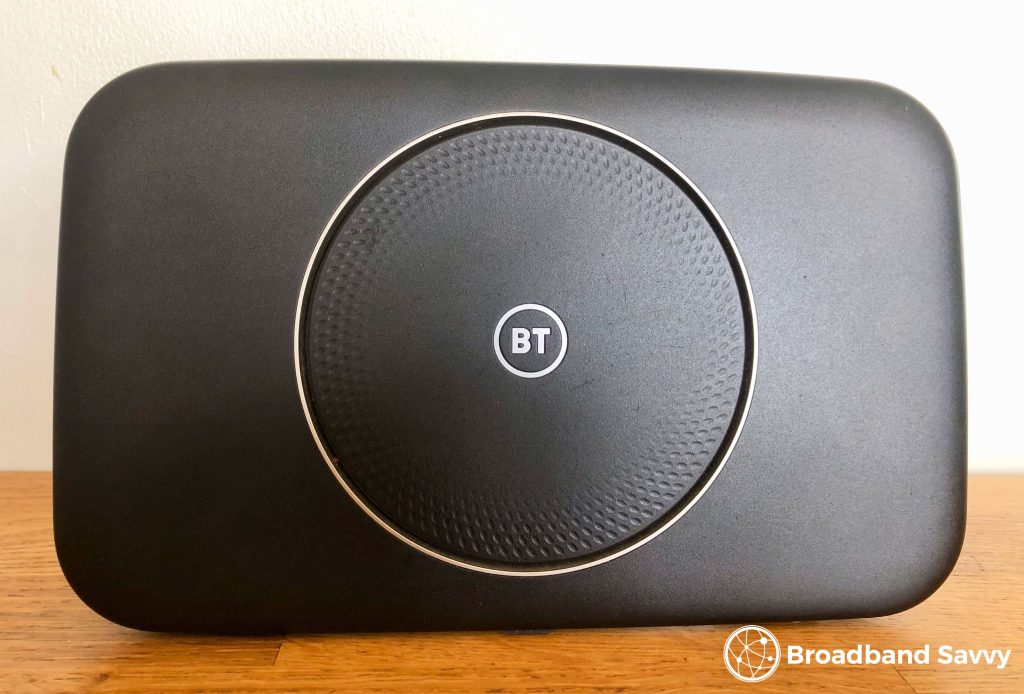
So, if you have a larger house and want to ensure you get good WiFi signal, EE might be a better choice than BT right now.
The two providers are very similar – BT actually owns EE – but EE tariffs tend to come with much better WiFi routers.
Pros
- Good customer service.
- Great value for money, especially with the included reward card.
- Simple plans, but still has useful add-ons available.
Cons
- Slightly outdated WiFi router.
6. Sky Broadband
Similar to BT, Sky Broadband is another great choice if you want great customer service.
Their support team is based in the UK, and consistently achieves really good results on Ofcom’s customer satisfaction surveys.
Sky’s default router is quite basic, again similar to BT. However, you do have the option to pay to upgrade to the Sky Max Hub, shown below, which comes with WiFi 6.
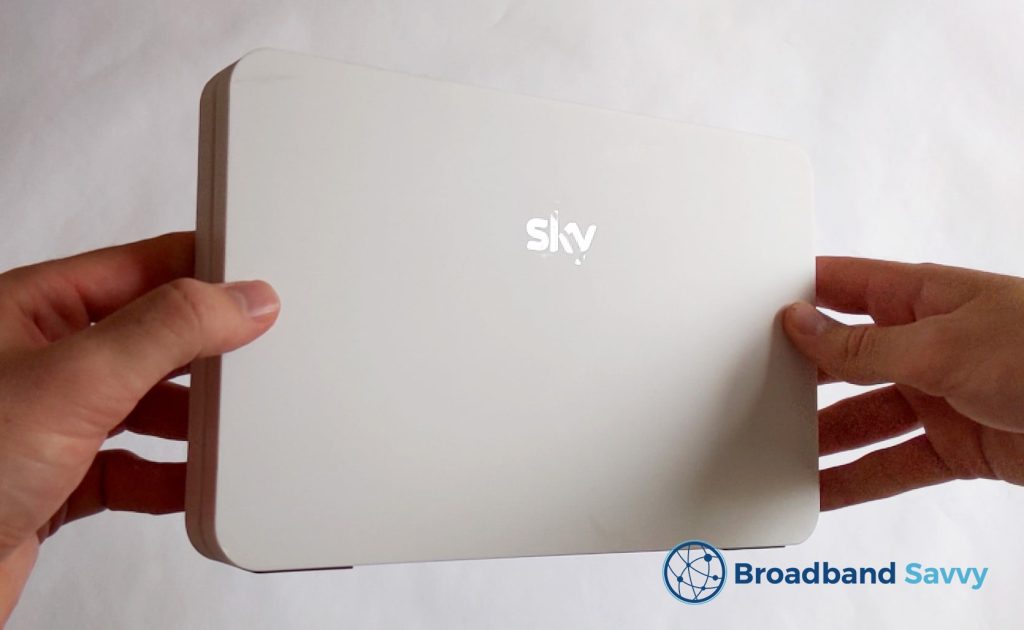
Plus, on their incredibly fast 2.5 Gbps and 5 Gbps plans, which are only available in certain areas, you get the Sky Gigafast+ Hub router, which comes with WiFi 7.
Sky is also a great choice for broadband and cable TV, as well as broadband and calls, though their inclusive calling bundles can be a little expensive.
Also, Sky is one of the only major broadband providers in the UK that doesn’t have any mid-contract price rises baked into their contracts.
Sky can increase prices during the minimum commitment period, but if they do this, you can leave the contract, which isn’t the case with most other providers.
Sky Broadband’s prices are also very competitive, but we just wish they would offer a better WiFi router on their slower plans, without having to pay an additional monthly fee for a WiFi 6 upgrade.
Pros
- Great customer service.
- Offers some of the fastest broadband in the UK, up to 5 Gbps.
- Huge range of add-ons available, including TV and home phone bundles.
- No built-in mid-contract price rises.
Cons
- Must pay extra for a WiFi 6 router on most plans.
7. National Broadband
If you live in a rural area with poor fibre broadband availability, National Broadband is definitely worth looking at.
Similar to Three, this company uses 4G or 5G technology to help you get online. However, rather than just being locked to a single provider’s masts, they have access to all four of the major mobile networks, allowing them to use the one that offers the best speeds and signal at your address.
In very remote locations, they can also install an external antenna on your house, helping you get good speeds even if you’re a long way away from the nearest mobile mast.
Unlimited data is included by default, and National Broadband has attentive, UK-based customer service. They pay much closer attention to each individual customer than some of the bigger providers on the market.
The only real downside to this provider is they’re a bit more expensive compared to buying 4G/5G broadband from Three directly.
Pros
- Offers the fastest available broadband in many rural locations.
- Great customer service.
- Option of an external antenna installation for even stronger signal.
- Comes with unlimited usage, which can be rare with 4G/5G internet.
Cons
- Slightly expensive.
8. Airband Broadband
Airband is quite a unique broadband provider.
Similar to National Broadband, they also focus on serving rural and remote areas, especially in Oxfordshire, Gloucestershire, Devon, Somerset, Warwickshire, and Worcestershire.
To achieve this, they have deployed both a fibre-to-the-premises and a wireless broadband network, both of which offer download speeds of up to around 900 Mbps.
Airband’s broadband deals are quite good value for money, given that they offer the fastest available speeds in many areas they service.
They can be a bit expensive if you want extremely fast download speeds, but Airband does include quite a good WiFi 6 router when you join them.
Plus, they normally offer quite large introductory discounts for new customers, such as a period of free usage for the first six months of the contract.

Pros
- Fast download speeds.
- Offers coverage in some quite remote areas.
- Discounts on offer for new customers.
Cons
- Monthly costs are a bit high on their faster plans.
9. YouFibre
YouFibre offers one of the fastest widely available fibre broadband plans in the UK at the moment.
If you can get YouFibre in your area, you can get a download and upload speed of up to 7 Gbps on their fastest plan, though this tariff is very expensive.
Much cheaper deals are available though, with symmetrical 500, 1,000, or 2,000 megabit speeds. These packages are really good value for money, and offer more than enough bandwidth for most families.
Plus, there are no mid-contract price rises on YouFibre Broadband tariffs, which is good given that you need to commit for 24 months.
YouFibre also offers good customer support, and supplies a WiFi 7 router as standard on all of their plans, which is great.
The only real downside to this provider is their availability. Their network is actually available in a large number of counties throughout England (except London), Scotland, Wales, and Northern Ireland, but YouFibre doesn’t cover very many different addresses just yet.

Pros
- Offers some of the fastest broadband in the UK.
- Includes a WiFi 7 router as standard.
- Great customer service.
- No mid-contract price increases.
Cons
- Fastest plan is quite expensive compared to the slower tariffs.
10. Hyperoptic Broadband
Hyperoptic is an altnet that focuses on serving larger towns and cities throughout the UK.
They offer fast broadband with symmetrical download and upload speeds of up to 900 Mbps, giving you plenty of bandwidth even if you have a lot of people online at home.
Hyperoptic offers the choice of a 24 month, 12 month, or 1 month contract, which is great, and their monthly costs are very competitive. However, they do have upfront fees on some of their plans.
Part of the reason Hyperoptic is so price-competitive is they’re quite a basic option.
Compared to the likes of EE or Vodafone, they have very few extras or add-ons you can choose to include, though this isn’t an issue if you’re just looking for fast broadband.
However, you can still get a landline connection if desired, which is good if you still use your home phone on a regular basis.
Pros
- Offers fast, symmetrical speeds.
- Low monthly costs.
- Good range of contract lengths to choose from.
Cons
- Tariffs often come with upfront fees.
How to choose the right broadband provider
Below, we’ll explain some key things to consider when buying broadband, to help you find the right provider and plan for your specific needs.
Types of broadband networks in the UK
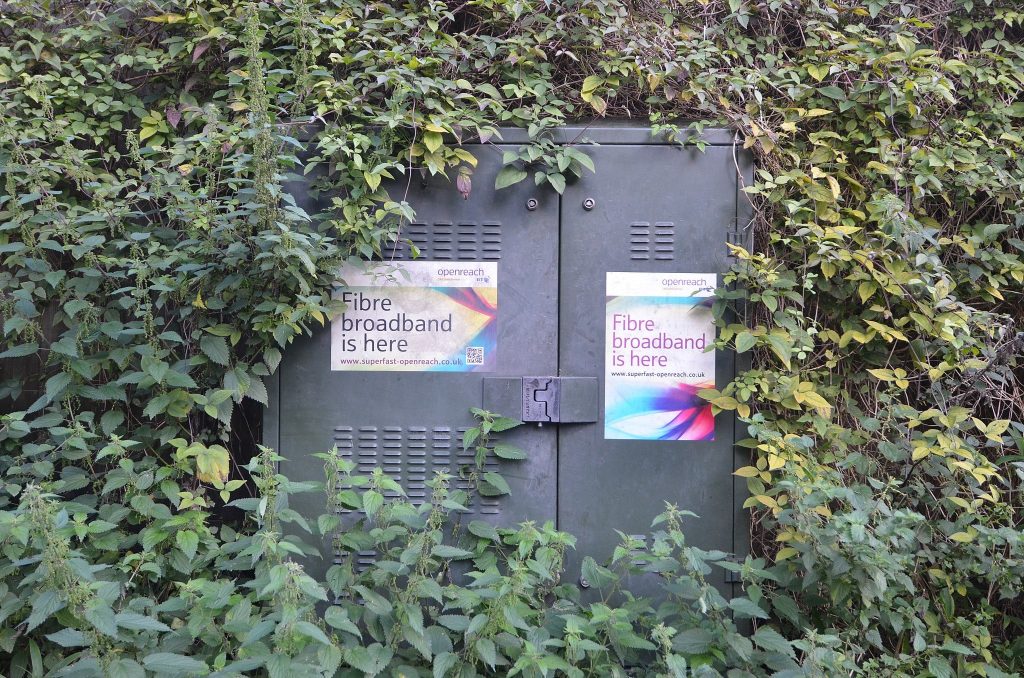
In the UK, there are now quite a few different broadband networks available in different parts of the country.
You’re no longer limited to just BT and Virgin Media, meaning there are more providers to choose from, and better deals to be found in certain areas.
Currently, these are the five broadband networks (or types of networks) available in the UK:
- BT Openreach – available in nearly the entire UK, and is used by BT, Plusnet, Vodafone, NOW Broadband, and more. Delivers fibre to the premises (FTTP) at most addresses with download speeds up to 900 Mbps or 1,600 Mbps with some providers.
- Virgin Media – available in about 56% of the UK. Uses coaxial cable instead of fibre at most locations, offering slightly slower upload speeds compared to full fibre. Delivers download speeds up to 1,130 Mbps or 2,000 Mbps at some locations.
- KCOM – similar to Openreach, but only available in Hull, offering speeds up to 900 Mbps.
- Altnets – there are now a number of small, independent full fibre broadband networks available in different areas throughout the UK. One of the biggest ones is CityFibre, which you can join through Vodafone and Sky in certain areas. Others include YouFibre, Hyperoptic, and Community Fibre.
- Three 4G/5G Broadband – uses the Three mobile network to help you get online. Other mobile networks like EE also offer similar services, but are much more expensive, and generally have more restrictive data allowances.
When buying broadband, it’s important to do your research on the available networks at your address, in order to get an idea of the full range of providers available to choose from.
In general, altnets offer the best value for money – many of them are currently selling very cheap deals in order to gain market share.
However, Three 4G/5G broadband is usually the cheapest way of getting online at home in the UK. We’ve explained more about the differences between fibre and wireless broadband later on in the article.
How to save money on broadband
If you’re looking to reduce your broadband bill as much as possible, here are some ways you can do this.
- Search for all available providers at your address. As we mentioned above, this will give you the best chance of finding the cheapest available deal. These days, there are quite a lot of different providers on the market, especially in urban areas.
- Only pay for the speed you really need. It may not be worth buying an expensive ultrafast broadband plan if you don’t download or upload large amounts of data. We’ve discussed how to calculate your internet speed needs in the next section.
- Avoid expensive add-ons, like cable TV. If you buy a broadband and TV plan from a provider like Virgin Media, it’s not uncommon for this to double your monthly cost compared to buying broadband on its own. Other add-ons such as inclusive landline calling and WiFi extenders can also massively increase your monthly cost, so they’re best avoided if you want to lower your bill.
- Check for 4G/5G home broadband coverage. The Three 4G Hub and 5G Hub currently offer the cheapest home broadband in the UK, so it’s a good idea to see if you can get this service at your address using the Three broadband coverage checker.
- Bundle your broadband with your mobile provider. Some mobile networks, like Vodafone, offer discounts if you buy broadband from them as an existing mobile customer. EE also offers broadband deals that give you access to discounted SIM plans.
- Ensure you’re getting good WiFi tech. If you have a larger house and you buy a broadband plan with a fairly cheap router, you might find that you’ll need to buy your own router or mesh WiFi kit at a later date, in order to get good signal throughout the house. To avoid this, make sure that the router you’re getting is up-to-date, with the latest wireless communication standards such as WiFi 6 or 7.
- Look into social tariffs. If you’re on benefits or certain other types of income support payments, you may be entitled to receive a cheaper type of broadband deal not available to the general public, known as a social tariff. We have explained more about how social tariffs work a bit later in the article.
What broadband speed do I need?
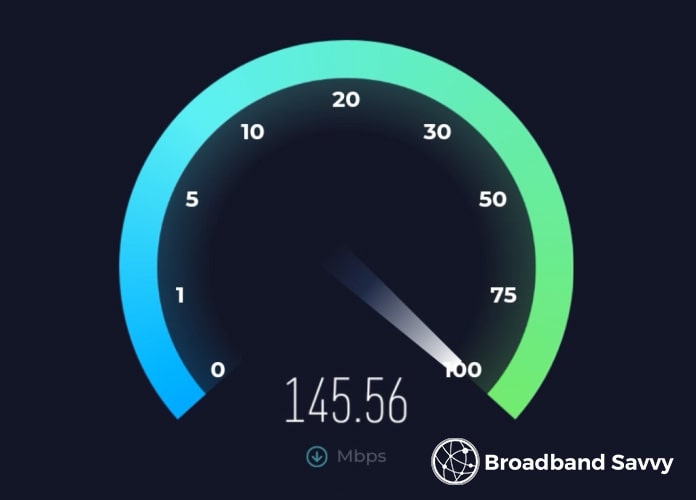
The more people you have online at home, and the more you use the internet, the more bandwidth you need to ensure a good experience, and avoid any buffering or slowdowns.
Therefore, if there’s only one or two of you at home, and you don’t often do things like download large game updates on your PlayStation, you might not need ultrafast broadband.
As a general rule of thumb:
- 50-100 Mbps is plenty for couples and singles, as long as you do not download large multi-gigabyte files on an everyday basis.
- 100-200 Mbps is plenty for most families of three to four people.
- If you often have lots of people online at once, and often make large downloads or work from home, you may want 300-400 Mbps or so instead, to make file transfers more efficient, and ensure that your connection never slows down.
Of course, having ultrafast broadband with a 500 Mbps, 900 Mbps or higher download speed is always nice to have, but it can be quite expensive, depending on the provider you choose.
To get a more accurate idea of how much bandwidth you need, use our internet speed needs calculator.
What should I expect to pay for home broadband?
If using an Openreach provider like BT or EE, you can typically expect to pay about £30-£35 per month for a broadband deal with a superfast download speed (up to 300 Mbps). Ultrafast broadband, with a faster download speed, normally costs between £35-£45 per month before adding any extras such as a home phone line.
Virgin Media can often be slightly cheaper, but they tend to increase your monthly cost by a much larger amount when the contract expires, and their add-ons can be expensive.
Altnet pricing can vary significantly depending on the provider. Many offer very fast broadband for less than £30 per month, which is great, but other altnets are more expensive than the main Openreach providers.
Mobile broadband solutions like the ones Three offers usually cost less than £20 per month on a 24 month contract.
How to avoid mid-contract price rises

As of 2026, mid-contract broadband price rises are still permitted by Ofcom, as long as the increase is defined in pounds and pence at the time of buying the plan.
As a result, most broadband contracts now have a £3 or £4 annual price increase built in, which usually takes place every April.
And since most broadband deals normally cost around £30-£35 per month, this means you’ll effectively be paying 10% extra per year if your tariff has a price increase, which is quite a significant amount.
Fortunately, there are some broadband providers, mostly altnets, that have no mid-contract price rises on their plans.
There are also some larger providers, like Sky Broadband, that have no built-in mid-contract price rises, but say that they may increase prices mid-contract. This is preferable to having defined increases built into the agreement, because if the amount is not specified beforehand, you can leave the contract when the price rise takes place.
Which broadband provider has the best customer service?
Each year, Ofcom performs surveys to assess the customer service performance of each major broadband provider in the UK, looking at factors such as average time to answer the phone, numbers of official complaints, and overall customer satisfaction.
According to this data, Sky and Plusnet have some of the best customer service in the UK.
Altnets also tend to have quite good service, because as smaller companies, they can pay more attention to each individual customer. However, this varies from provider to provider.
Fibre vs mobile broadband
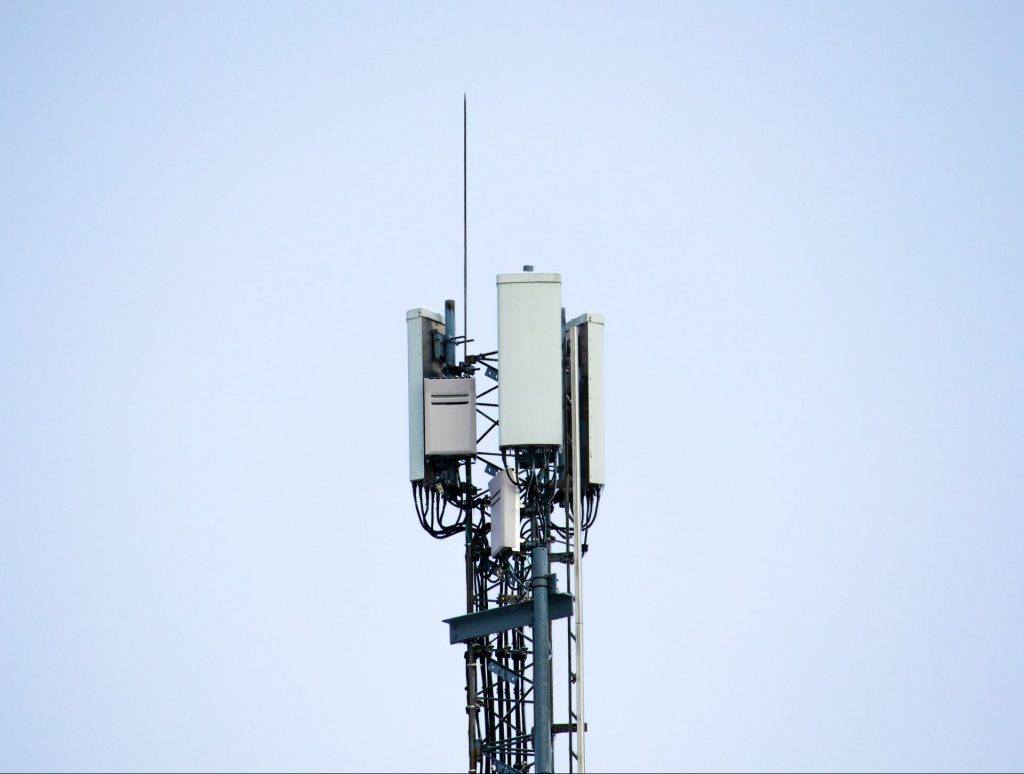
As we touched on earlier in the article, 4G and 5G broadband can be a really good way to save money, often allowing you to get online for less than £20 per month.
Rather than connecting to the internet using a phone or broadband port, mobile broadband uses the 4G or 5G network, just like your phone.
This means it’s very easy to set up compared to a fibre connection, with no engineer visit needed. And you can often pick up and take the 4G or 5G router and use it elsewhere in the UK, as long as you go somewhere with good mobile network signal.
As an end-user, your experience with both technologies is almost identical. No matter whether you use fibre or 4G/5G, you get a router that creates a WiFi hotspot you can use to get online, and comes with Ethernet ports you can use to plug in devices directly.
You can get good speeds with mobile broadband – typically around 40-50 Mbps with 4G, and 200-500 Mbps with 5G. However, fibre broadband has higher maximum speeds of up to 5,000-7,000 Mbps with certain providers.
Compared to fibre broadband, your download and upload speeds will normally be a bit more variable when using 4G or 5G.
The main downside to wireless internet though is its latency is a bit higher compared to fibre, at around 40ms instead of 10ms.
This isn’t a problem for most people, but can be an issue if you play a lot of competitive online games.
Social tariffs explained
Most larger broadband providers in the UK currently offer social tariffs – cheaper, often slower broadband plans available only to those on certain types of benefits and income support payments.
With most providers, you will need to be receiving a government support payment such as Universal Credit, pension credit, jobseeker’s allowance, or a disability allowance to access their social tariffs.
Most providers’ social tariffs have lower monthly costs compared to buying a regular broadband deal from them, as well as a shorter-term contract. And in general, social tariffs do not offer superfast or ultrafast broadband speeds.
With BT for example, they have three of these types of tariffs:
- BT Home Essentials 36 Mbps – no income: £16 per month, 12 month contract
- BT Home Essentials 36 Mbps: £21 per month, 12 month contract
- BT Home Essentials 67 Mbps: £25 per month, 12 month contract
Some providers, such as Virgin Media, offer rolling monthly contracts on their social tariffs, meaning you don’t need to lock in for a long time.
To buy a social tariff, you typically need to call the provider, rather than placing an order on their website, in order to prove your eligibility.
After that, the provider will check in every year (or when your contract expires) to ensure you still meet the requirements for the plan you are on.
How to switch broadband providers

Fortunately, due to Ofcom’s new One Touch Switching scheme, changing broadband providers is easier than ever.
Here’s what you need to do:
- Place your order for a new broadband plan. In almost all cases, your new provider will contact your old provider to cancel your current plan, so you don’t need to do this yourself. You just need to place the order for the new connection, and specify the provider you are switching away from.
- Schedule a go-live date and an engineer visit, which you can normally do when signing up. If you are changing broadband networks, such as from Virgin Media to Openreach, a technician visit will likely be needed, unless the service has been used at your address before. You will need to be home during the installation process. Most of the time, the technician just needs to connect the last bit of the broadband connection from the street to your house, which may take an hour or two.
- Make the switch. If an engineer visit is needed, they will normally set everything up for you. If not, you will receive your new router in the mail along with instructions to set it up yourself. Typically, you just need to unplug the old router, then plug the new one into power, and connect it to your broadband port. Once it’s turned on, the new router will set itself up, and when it’s done, you can log into WiFi using the credentials printed on a sticker on the device.
Do broadband plans come with unlimited downloads?
All fibre broadband deals in the UK now come with unlimited downloads and uploads, meaning you no longer need to worry about hitting any monthly usage caps.
4G and 5G broadband plans do sometimes come with a monthly limit. However, this isn’t the case with the Three 4G Hub and 5G Hub.
Can I keep my landline phone line and number?

With the recent switch to digital voice, some broadband providers, such as Plusnet, have stopped offering a landline phone service.
However, you can still keep your home phone, including your number, when switching broadband providers.
All you need to do is choose a broadband provider that still offers landline calling, such as EE, BT, Virgin Media, or Sky. Then, make sure to supply your phone number to them when signing up, and request it be transferred over.
Just be aware, getting a landline service can now be quite expensive, even though you no longer need to pay for line rental with the new digital voice tech.
Most providers will charge you an extra £5-£6 per month for a landline, and you’ll pay an extra £10-£15 per month if you want inclusive anytime calls to UK numbers.
Can I keep my ISP email address?
If you are using an email address attached to your broadband account, you need to be careful when switching providers.
Depending on the company you’re with, you may lose access to your email account immediately after leaving, or after a certain delay.
- With BT, you will be switched to a Basic email account after 60 days, meaning you won’t be able to access your emails through anything except the BT website, unless you pay £7.50 per month for a Premium account.
- With Virgin Media, your email account will be closed after 90 days.
- With Plusnet, your email account will be closed immediately after you leave.
A month or two before changing broadband providers, it’s a good idea to open an email account with a separate service such as Gmail, and begin migrating your financial, social media, and other accounts over to the new email address.
This will give you a bit of time to ensure that you change the email address on all of your important logins before losing access to the old email account.
Conclusion
You’ve reached the end of our guide to the best broadband in the UK.
If you’re still not sure which plan to buy, or which provider to join, leave us a comment below, and we’ll get back to you as soon as we can.
Related resources
Gigaclear Broadband Review | Is Gigaclear Any Good? 2026
Learn whether Gigaclear Broadband is any good. We've reviewed Gigaclear based on their WiFi speeds, router, prices, and more.
Airband Broadband Review | FTTP & Fixed Wireless | 2026
Learn whether Airband Broadband is any good. We've reviewed Airband based on their speeds, customer service, value for money, and more.
BeFibre Broadband Review | Customer Service, Router, Speeds
Learn whether or not BeFibre broadband is any good. We've reviewed BeFibre based on their speeds, router, value for money, and more.
Fibrus Broadband Review | Based On WiFi, Router, Service, Speed
In this article, we've reviewed Fibrus Broadband based on their speeds, router, customer service, and more, to see if they're worth joining.

Tyler is the co-founder of Broadband Savvy. He has been helping people improve their broadband connectivity since 2018 by writing about fibre broadband and mobile broadband providers, as well as creating tutorials to help people improve their broadband speeds and Wi-Fi signal.
Tyler is responsible for the majority of buyer’s guides and broadband reviews published on Broadband Savvy. He has a wealth of experience testing and reviewing different broadband tariffs, including fibre internet plans, as well as 4G and 5G broadband deals. He is responsible for testing and evaluating Wi-Fi routers, performing speed and latency tests, and comparing the value for money of different broadband providers on the market in the UK.
Before co-founding Broadband Savvy, Tyler had a long history of tinkering with computers. He built his first PC at the age of 12, and since then, he’s become obsessed with all things networking and internet-related. He’s a massive gamer, loves Rocket League, and also plays Sunday League football.
A great independent look at all the providers I can get, as there is so much mis information out there, am at present with virgin, who unless like Martin Lewis says you tell them you are not happy with the price they are charging, will screw you for the prices they charge, it is nice to know that there are new companies coming on to put the Big boy’s under pressure to bring down the costs they charge, thank you so much for an excellent web site giving so much information Regards Roy
Hi Roy,
Thanks for the kind words. Please feel free to reach out if we can be of any assistance as you choose a new provider.
Thanks