

As a university student, you can sometimes access cheaper, shorter-term broadband deals than those available to the general public.
In this guide, we’ve explained how student broadband plans work, and explained which broadband providers offer these deals at the moment.
Student broadband deals


Contents
How student broadband deals work
Certain broadband providers offer different broadband deals that are only available to those with a university email address.
There are two main differences between these deals and regular broadband plans that anyone can access:
- The prices are often (but not always) lower.
- The contract lengths are often (but not always) shorter – such as 1 month or 12 months, instead of 24 months.
To buy a student broadband deal, you just need to sign up on the provider’s website, and prove that you’re currently enrolled as a university student.
Just note that student deals won’t normally appear on the provider’s main broadband deals page or postcode checker.
There is usually a separate page dedicated to deals for university students that you have to use.
Take a look at the following pages to see some examples:
Broadband providers that offer student deals
There are currently four major UK broadband providers that offer deals designed specifically for university students.
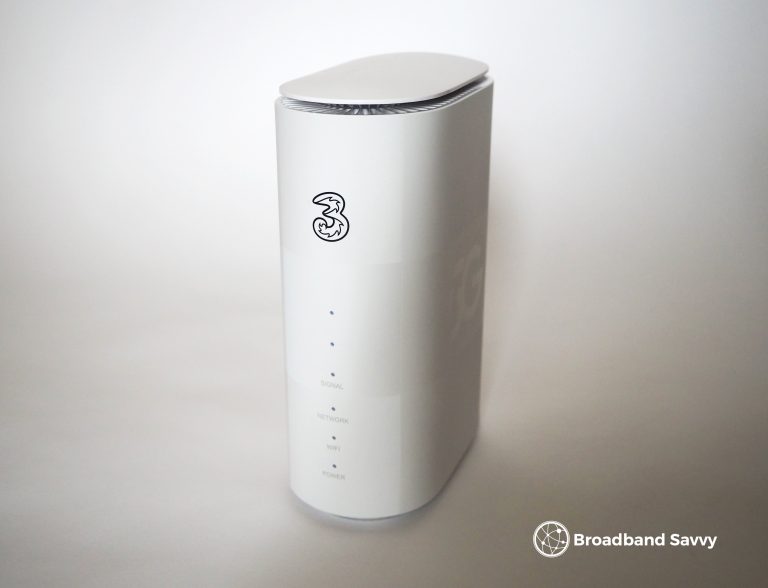
1. Three 5G Hub
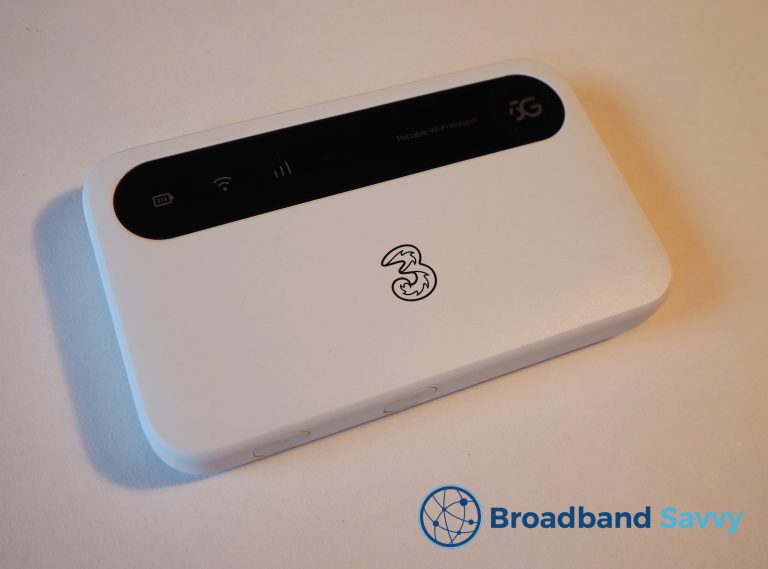
Three currently offers a significant discount on their 4G Hub and 5G Hub wireless broadband products for UK university students.
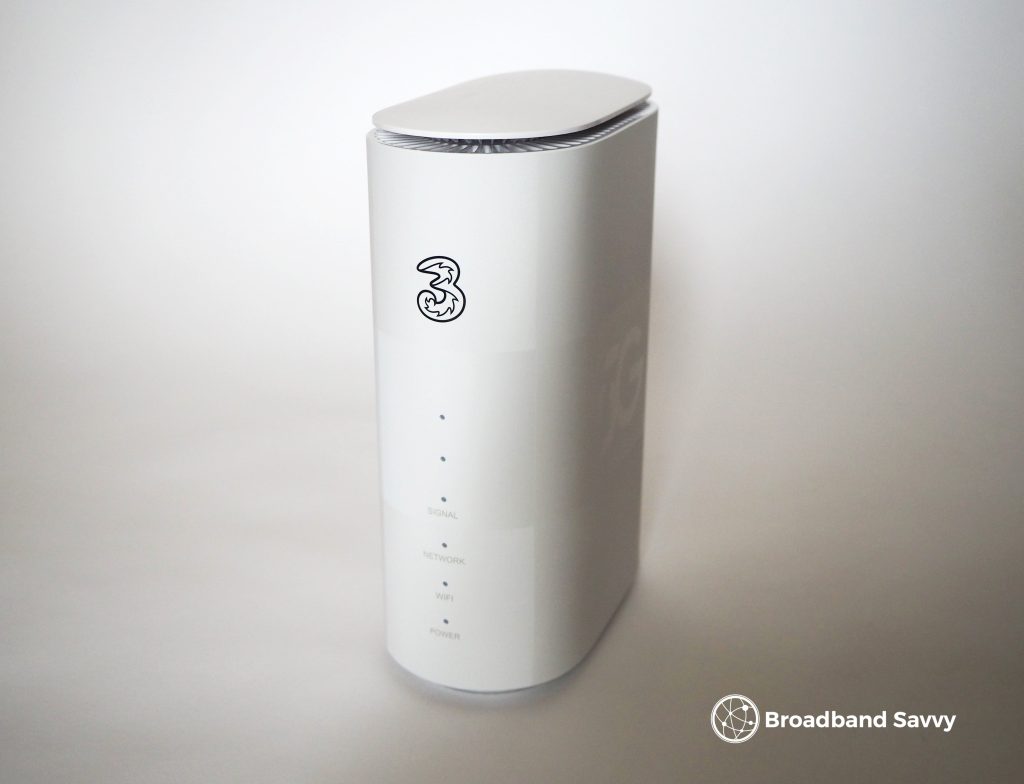
This is already one of the cheapest broadband deals in the UK, but with the discount, it’s almost unbelievably cheap – offering download speeds of 300 to 500 Mbps in our experience for a lot less than £20 per month, if you can get 5G signal at your address.
And since it uses the mobile network rather than fibre, getting started with the 5G Hub is also very easy, with no engineer visit needed before you get up and running.
You can set up the router yourself in 15-20 minutes or so, and also take it when travelling anywhere inside the UK, as long as you go somewhere with 4G or 5G signal.
The only real drawback to this device is it’s not the best for households with five people or more online at the same time.
It doesn’t quite have the same robustness as a fibre broadband connection does – though buying fibre is typically a lot more expensive than getting a 4G Hub or 5G Hub.
Pros
- Extremely good value for money.
- Very easy to set up.
- Decent student discounts on offer.
- Can be used almost anywhere in the UK.
Cons
- Not the best for extremely large households.
2. BT Broadband
BT Broadband is available throughout almost the entire UK, and they offer special bundles for university students.
On their student deals page, you can access BT Broadband deals with 12 month contracts, rather than the default 24 months.
Though the short-term contract is very good to have, these deals are actually more expensive than BT’s regular plans, just because the contract length is half as long.
On the plus side though, BT Broadband has good customer support, and their new Smart Hub 3 WiFi router is a good bit of kit.
If you like the look of BT Broadband on a 12 month contract but the monthly costs seem a bit high, we recommend taking a look at EE Broadband instead.
BT owns EE, but offers much cheaper prices and better WiFi tech on their EE brand, compared to buying with them directly.
Pros
- Flexible 12 month contracts.
- Good WiFi tech.
- Great customer service.
Cons
- Expensive.
3. Hyperoptic Broadband
Hyperoptic is a broadband altnet with its own full fibre infrastructure, separate from BT, Virgin Media, or any other provider.
The benefit of this network is it offers symmetrical download and upload speeds, meaning they both match each other, which can be rare to see with other companies.
Hyperoptic’s monthly costs are quite good, and for uni students, there are discounts available compared to the regular price. Plus, they also give you the choice of a rolling monthly, 12 month, or 24 month plan, which is great.
In fact, Hyperoptic is one of the only providers on the market at the moment to offer month-to-month broadband contracts, though they are a bit more expensive than buying one of their longer-term plans.
The problem with this provider is, since they’re still building their network, you can’t get Hyperoptic broadband throughout the entire UK.
However, their coverage is mostly focused on city centres. And as a result, Hyperoptic is quite widely available in areas near most British universities.
Pros
- Fast, symmetrical speeds.
- Can get a 12 month or a rolling monthly contract.
- Good value.
Cons
- Not available everywhere.
4. Virgin Media Broadband
Virgin Media’s default contracts are 24 months long, but for university students, they offer 12 month deals with pretty reasonable prices.
It is worth keeping in mind, these deals are only available in old Virgin Media cable broadband areas – not their new full fibre deployment regions. Meaning, you can’t get symmetrical downloads and uploads, and the student deals aren’t available at postcodes with the new infrastructure.
However, Virgin Media has some of the cheapest student deals of any major provider other than Three, and they offer fast download speeds of up to 1,130 Mbps.
Their customer service has also improved a lot recently, and their new Hub 5 router is quite a good bit of kit, coming with WiFi 6.
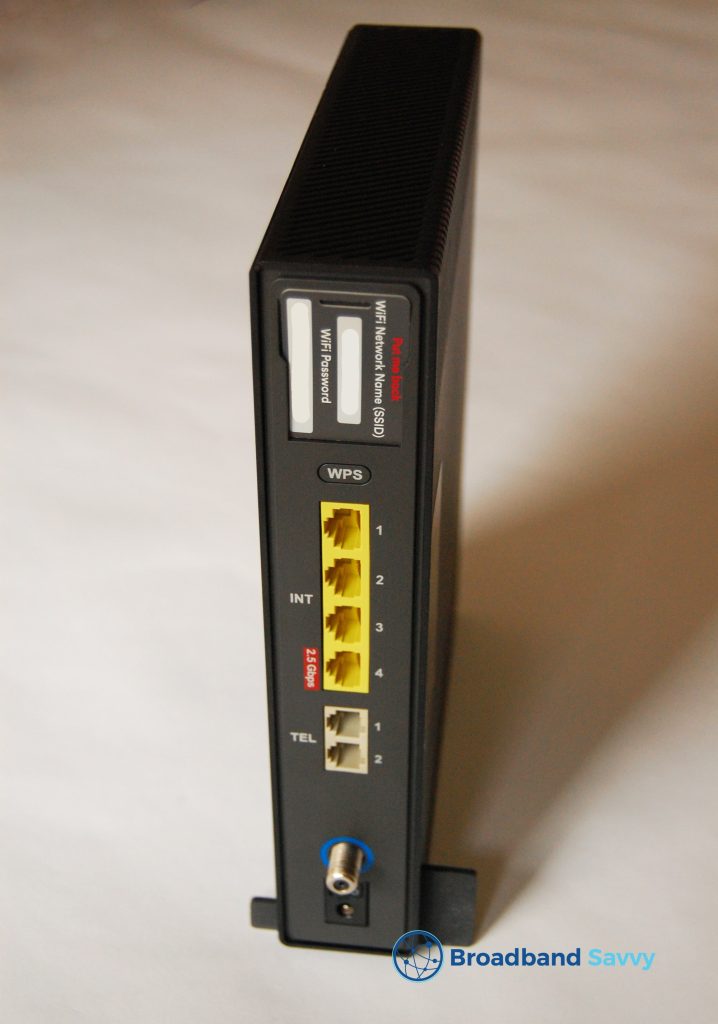
We just wish Virgin Media offered their student deals throughout the whole network, rather than just in older infrastructure areas.

Pros
- Great value.
- Fast download speeds.
- 12 month contracts on offer.
Cons
- Not available in full fibre areas.
Other providers worth considering as a university student
Apart from the dedicated student broadband deals mentioned above, there are other providers that offer cheap, short-term broadband deals not necessarily available exclusively to students.
- EE Broadband has cheap deals with good WiFi routers, and is available on a 12-month contract.
- Community Fibre offers very fast speeds and low monthly costs in Greater London, and also has 12-month contracts on offer.
- Vodafone Broadband is generally one of the cheapest providers on the market, though their deals are 24 months long.
FAQs
Who exactly is eligible for student broadband deals?

To access these student broadband deals, you have to be actively enrolled at a higher education institution in the UK.
As well as universities, this can include colleges and certain other organisations and research councils funded by the UK government.
How is eligibility verified?
Your enrolment is verified through access to an email address linked to a higher education institution. Meaning, you usually need to sign up with the broadband provider using an email address ending in .ac.uk.
This will be checked each time that you renew the contract – normally these broadband deals last for a year at a time.
This may also be checked through a third-party service that verifies university enrolment for the purposes of offering discounts, such as StudentBeans.
Are student-specific broadband deals actually worth buying?
Historically, student broadband deals used to offer a lot more value, especially with the likes of BT.
They used to come with cheaper prices, and special 9-month contracts, so that you didn’t have to pay for broadband if you went home during summer holidays.
However, these days, while they’re definitely worth looking at, student broadband deals are not as good as they used to be.
They can at times actually be more expensive than the regular plans, because providers sometimes charge more in return for the shorter contract length.
Therefore, we recommend also looking at regular broadband deals as a student shopping for broadband, to ensure you get the best deal possible.
Which broadband providers can I choose from?
Due to recent fibre rollouts by a range of different altnets around the UK, there are currently quite a large number of broadband networks to choose from in many parts of the country.
In student accommodation, WiFi is normally provided as an inclusive service.
But if you live in a flat, chances are there will be a particularly high number of providers to choose between, especially given that most universities are in urban areas.
Depending on where you are in the UK, you might be able to use:
- Openreach (sold by BT, Sky, EE, Plusnet, and many other providers)
- Virgin Media
- CityFibre (sold by Vodafone, Sky, and others)
- Netomnia (predominantly sold by YouFibre)
- Community Fibre (available in London)
What broadband speed do I need?
When choosing a broadband plan, you might also be wondering what speed it’s really worth paying for.
The answer is, it depends.
If you live alone or as a couple, you won’t need as much speed, because you won’t have as many people online at the same time.
But if you live in a flat or house share with four people or more, you will need more bandwidth to accommodate the extra people and other devices that need to get online.
As a general rule of thumb, 50-100 Mbps is plenty for singles and couples, while you might want 200-500 Mbps at a minimum in shared accommodation.
Use our speed needs calculator to get a better idea of the exact download and upload speeds you need to pay for, given how many people live at home, and how you use the internet.
Related resources
Best Temporary WiFi Plans | Short Term Broadband Deals
Discover the best short-term ways to get online. We review 5 of the best temporary WiFi solutions in the UK in 2026.
Best 5G Home Broadband Deals UK | 5G Internet Plans
Discover the three best 5G home broadband deals in the UK in 2026. Find the best way to get online with 5G internet.

5 Best Broadband And Anytime Calls Deals | Unlimited Data
Discover the UK's best unlimited broadband deals with anytime calls. We explain which providers offer unlimited broadband and calls.

Best Broadband And Mobile Phone Deals | Top 3 Bundles | UK
Discover the 3 best broadband mobile phone deals in the UK. Bundle broadband with a pay monthly phone or SIM deal - and save...

Tom is the founder of Broadband Savvy. He has nearly 10 years’ experience writing broadband tutorials, reviewing routers and internet service providers, and explaining broadband-related concepts. Tom is experienced as a writer, has appeared on national radio and in national newspapers, and also produces videos for the Broadband Savvy YouTube channel.
He currently specialises in writing content for Broadband Savvy designed to help people understand broadband jargon and terminology, increase their download and upload speeds, and improve their Wi-Fi connectivity. Tom also occasionally contributes to buyer’s guides and review articles on Broadband Savvy, utilising his knowledge of the broadband market in the UK.
When he’s not writing about broadband, you’ll find him hiking somewhere or playing on his Nintendo Switch.